
Japan for First-Timers: A Travel Guide to Tokyo, Osaka, and Kyoto
From an iconic metropolis to temples dating back more than a thousand years, Japan is rich in both modern experiences and cultural history. Tokyo, Osaka, and Kyoto are three major cities that first-time visitors to Japan often plan their itinerary around—and for good reason. Whether visiting lively streets filled with endless dining options or architectural landmarks steeped in history, these cities have activities and sights for every type of traveler.
In late October to early November 2025, Kevin and I visited Japan for the first time. What stood out to me throughout our visit was how orderly and punctual everything (and everyone) was, how efficient the public transportation system ran, and how abundant good food was. However, I’ll be honest—there were times when the crowds felt a bit overwhelming (watch my YouTube Short here for some of my thoughts). But Japan is incredibly beautiful and it was clear to me how much the people who live there deeply value intention, tradition, and nature.
To help plan your own visit to Tokyo, Osaka, and Kyoto, keep reading for our detailed guide and itinerary. Planning your first or even return visit to Japan can feel daunting with so much to see and do (and of course, eat), so I hope this guide makes it easier for you!

Table of Contents
Skip ahead to specific sections in this guide!

When to visit Tokyo, Osaka, and Kyoto
Below you’ll find a breakdown of what weather to generally expect during each season in Tokyo, Osaka, and Kyoto. These cities are busy year-round regardless of weather, with certain months drawing particularly large crowds—for instance, during cherry blossom and fall seasons.
• Summer (June—August): Expect warm and humid weather. Tokyo, Osaka, and Kyoto see longer daylight hours during summer, but be prepared for occasional rain, high humidity, and warm temperatures.
• Fall (September—November): Expect cool days and chilly nights. Autumn is often recommended as one of the best times to visit Tokyo, Osaka, and Kyoto with cooler temperatures and the chance to spot fall foliage throughout the cities.
• Winter (December—February): Expect cold weather. Snow is infrequent in Tokyo, Osaka, and Kyoto during winter—and when it does snow, it’s typically light. However, if you plan to take day trips closer to nearby mountain like Mount Fuji, be sure to check conditions prior to your visit as you'll likely encounter heavier snow.
• Spring (March—May): Expect cool to mild weather. Spring is also recommended as one of the best times to visit Tokyo, Osaka, and Kyoto with mild temperatures and cherry blossoms in full bloom. You can expect occasional light showers during spring, but the rain is far less heavy than during summer.

Where to stay in Tokyo, Osaka, and Kyoto
Below you'll find recommendations on where to stay in Tokyo, Osaka, and Kyoto—based on our personal experience. The most popular types of accommodation in these cities are hotels which range from budget-friendly to luxury stays, as well as vacation rentals like Airbnb.
• Tokyo: We stayed at Nishitetsu Inn in Shinjuku. This quiet, cozy hotel was just a short walk from central Shinjuku—a lively, neon-lit area packed with shops, restaurants, and bars that open late into the night. Shinjuku is well-connected to the rest of Tokyo, serving as a convenient starting point for visiting major areas in the city like Shibuya and Ginza. Note that accommodations in Tokyo are typically smaller than what you might find elsewhere.
• Osaka: We stayed at this Airbnb right below Namba. I loved the neighborhood our Airbnb was located in—I distinctly remember locals biking through the streets during quiet mornings, as well as the unassuming mom-and-pop restaurants. Namba itself was just a quick subway ride away, and is the liveliest area in Osaka with countless shops, restaurants, and bars lining its streets.
• Kyoto: We stayed at Oakwood Hotel in Nakagyo, which was easily my favorite accommodation during our visit. This cozy hotel was tucked away in a quiet pocket of Kyoto, but still within a short distance from major (and much more crowded) areas like Gion.

Getting around in Tokyo, Osaka, and Kyoto
Below you'll find recommendations on how to get to, from, and around Tokyo, Osaka, and Kyoto.
Getting to and from Tokyo, Osaka, and Kyoto: Because these three cities are major transportation hubs, getting in and out is easy and seamless whether you’re flying or traveling by train.
• Tokyo: Most visitors fly into Narita International Airport (NRT) or Haneda Airport (HND), or take a Shinkansen bullet train to Tokyo Station or Shinagawa Station. We flew into NRT and took a Narita Express train into the city, which did not require advance booking.
• Osaka: Most visitors fly into Kansai International Airport (KIX), or take a Shinkansen bullet train to Shin-Osaka Station. We traveled from Tokyo to Osaka by Shinkansen. I recommend booking your ticket in advance through Klook, which lets you can scan a QR-code boarding pass directly from the app and bypass ticket lines. We also pre-selected seats on the right side of the train for views of Mount Fuji along the way.
• Kyoto: Since Kyoto doesn’t have a major airport, most visitors get to the city by taking a Shinkansen bullet train to Kyoto Station. However, if you're traveling from Osaka, I recommend taking a regular JR train instead—it’s more affordable, just as convenient, and doesn’t require advance booking.
Getting around in Tokyo, Osaka, and Kyoto: Japan’s public transportation system is extremely efficient and easy to navigate, making it simple to get around without a car. I recommend adding a Suica card (a prepaid transit card) to your mobile wallet or picking up a physical Suica card—which is available at most major train stations. You can use it across Tokyo, Osaka, and Kyoto to easily tap in, tap out, and reload funds as needed.
• Tokyo: Tokyo is best explored by subways, trains, and walking, with buses, taxis, and rideshare available. For subways and trains, tap your Suica card when entering and exiting. For buses, some require tapping your Suica card when entering and exiting, while others only require tapping once when entering. We just followed what we saw locals do!
• Osaka: Osaka is also best explored by subways, trains, and walking, with buses, taxis, and rideshare available. For subways and trains, tap your Suica card when entering and exiting. For buses, enter from the back and tap your Suica card at the front when exiting.
• Kyoto: Kyoto is mostly accessible by buses and walking, with subways, trains, taxis, and rideshare available. For subways and trains, tap your Suica card when entering and exiting. For buses, enter from the back and tap your Suica card at the front when exiting.

Travel tips for Japan
Below you'll find extra bits of information that you might want to know before your visit to Japan.
• Are there international entry requirements that I should be aware of? As of November 2025, United States citizens only need a valid passport to enter Japan. However, entry requirements can change or vary depending on where you're traveling from—be sure to check the most up-to-date requirements here before your visit.
• What currency should I bring? While credit cards were widely accepted throughout our visit, you should plan to bring Japanese Yen as some places only accept cash—for instance, food stalls and temples. For reference, we brought around 150,000 yen for our 9-day visit and had plenty left over.
• Which eSIM should I get? I purchased this eSIM from Airalo, which worked reliably throughout our visit. If you plan to purchase an eSIM from Airalo, you can use my referral code for $3 off your first purchase: CAROL5123.
• Download offline apps prior to your visit. Be sure to download offline apps like navigation maps and translation tools ahead of time. I recommend Google Maps for real-time public transit directions and Google Translate which lets you translate text using your phone's camera.
• Which plug type do I need? You’ll need a Type A plug.
• Be respectful of local etiquette (and locals). Public transportation in Japan is much quieter than in places like New York or San Francisco. We quickly noticed that people rarely talk, even in crowded spaces, so try to be mindful when you do! At times, we also saw tourists in places they shouldn't have been to take photos—which felt disrespectful to locals and honestly made some experiences feel less genuine.
Our 9-day itinerary in Japan
Below you'll find our 9-day itinerary for Tokyo, Osaka, and Kyoto. This itinerary is what worked best for our schedule and is not meant to cover all the sights in these cities.
Day 1 (Tokyo):
Sushi Mon: After checking into our hotel in Shinjuku, we walked over to a nearby restaurant for dinner. Sushi Mon was the perfect way to kick off our visit—the toro, salmon, and yellowtail nigiri were all delicious. This was our first time trying a lemon sour (a popular Japanese alcoholic mixed drink), which was so refreshing!

Day 2 (Tokyo):
Kameya: We began our morning with breakfast at Kameya, a small food stall tucked away in an unassuming alley and specializing in soba noodles. I had the hot soba with tempura and a soft-boiled egg, which was so comforting on a chilly morning. I distinctly remember the quietness of the stall—everyone simply enjoying their meal.

Meiji Jingu: After having breakfast, we visited Meiji Jingu—a Shinto shrine nestled in a large forest. Seeing all of the trees, torii gates, and lanterns when it was still early and quiet in the morning felt incredibly idyllic. This was one of my favorite memories from Tokyo.


Tsukiji Market: Tsukiji Market is a famous seafood market with a number of food stalls and restaurants offering a range of Japanese food—including of course, seafood! While I had pictured the bustling seafood market on the pier from old photos (that part of the market has moved to a more modern facility), it was still fun to wander through the market and see all the vendors. At the market, we had toro nigiri as well as daifuku (mochi rice cake filled with red bean paste and topped with a strawberry)—both were delicious.


Roppongi Hills Observation Deck: The observation deck at Roppongi Hills offers a 360-degree view of Tokyo, giving you a sense of how massive the city is. From this viewpoint, you can also spot the bright-red Tokyo Tower rising above the city.
Tickets are required, and can be purchased either online in advance or on-site. Click here for more details.


Shibuya Crossing: If you’ve seen photos of Tokyo, chances are you’ve seen Shibuya Crossing. We’d never experienced anything like it—hundreds (sometimes even thousands) of people crossing in every direction at an intersection during a single green light.
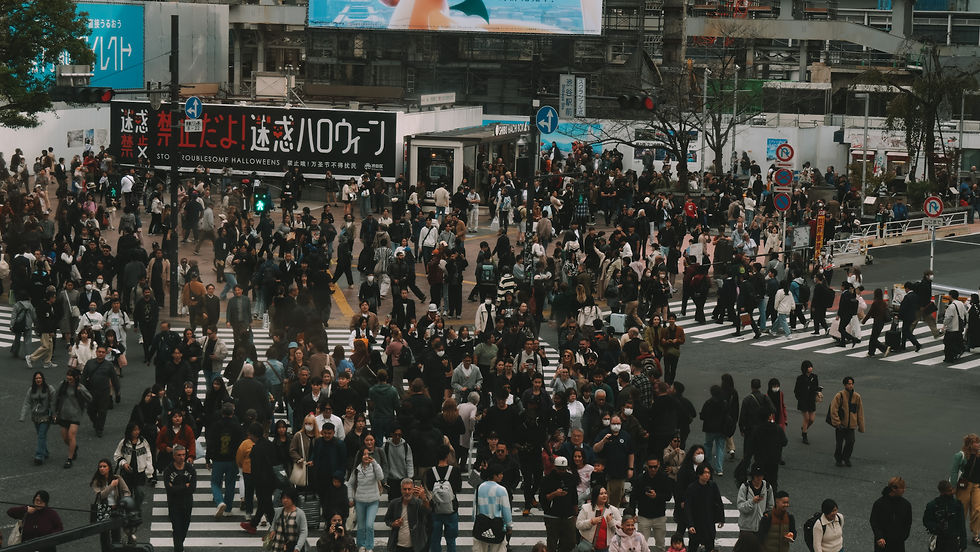

Shinjuku: After resting at our hotel, we explored Shinjuku which really came alive at night—packed with shops, restaurants, bars, and clubs. Walking toward Golden-Gai, we passed by towering, neon-lit buildings and huge crowds at every turn. Golden-Gai itself is a unique area made up of narrow alleys lined with countless snug bars.
Day 3 (Osaka):
Muteppou Ramen: After taking a Shinkansen from Tokyo and dropping off our luggage at our Airbnb, our first stop in Osaka was lunch at Muteppou Ramen. This restaurant offers a traditional ramen dining experience—ordering from a vending-style machine and eating at individual seats with dividers.

Dotonbori: Stretching along a canal, Dotonbori is Osaka’s central entertainment district—lined with shops, restaurants, bars, and clubs. Parts of this district felt nostalgic with its red neon signs and quirky storefronts, like a step back in time.


Hozenji Yokocho: Hozenji Yokocho is a narrow, stone-paved alley lined with unassuming shops and restaurants. I loved how quiet it was, compared to its neighbor Dotonbori.
While you’re here, be sure to stop by Hozen-ji Temple—a small Buddhist temple where the air is thick with the smoke and smell of incense. Something about this place felt so comforting, especially that familiar scent that reminds me of home.

Taiko Sushi: After briefly visiting Kuromon Market (a popular market with numerous food vendors) and resting at our Airbnb, we headed to Taiko Sushi for dinner. At this restaurant, guests are seated around the chefs, who prepare the fish right in the center. The sushi here was delicious—and affordable!

Shinsekai: Dating back to 1912, Shinsekai is a unique district that feels almost like a carnival—with restaurants, shops, and even carnival games! This place comes alive at night when bright lights from its buildings completely illuminate the streets. With Tsūtenkaku Tower rising behind it, Shinsekai feels like something out of an old film and is unlike any place we'd ever seen.

Day 4 (Osaka):
FamilyMart: We started our morning with breakfast at FamilyMart. I was excited to try the popular Famichiki (deep-fried chicken), which was so tender and juicy—and made the perfect breakfast when paired with an egg salad sandwich.
Convenience stores in Japan are known for their wide range of fresh foods, snacks, and beverages. 7-Eleven, FamilyMart, and Lawson are the biggest chains—you’ll spot one on just about every corner. We pretty much went to at least one convenience store every day, but I’ll spare you the daily mentions in this itinerary!

SOT Coffee Roaster: This was a rainy and gloomy day, so we enjoyed a cozy morning at SOT Coffee Roaster after having breakfast. Their coconut latte topped with Nutella and coconut flakes was delicious!

Osaka Castle: Seeing Osaka Castle in person was incredible—especially after watching "Shōgun" earlier this year (I highly recommend it if you haven’t). Dating back to 1583, this castle is grand and rich with centuries of history.
Visiting the grounds around Osaka Castle doesn’t require tickets, but entering the castle itself does. Tickets can be purchased either online in advance or on-site. Click here for more details.

Go Go Curry: By the afternoon, it was pouring outside so we stayed in our Airbnb to rest before heading to nearby Go Go Curry for a late lunch. Their pork and chicken katsu curry was perfectly crispy, tender, and juicy.

Day 5 (Osaka & Nara):
Shabuwara: We began our day with a late breakfast at Shabuwara, which serves both sukiyaki and shabu-shabu. This was my first time trying sukiyaki, and I loved it! Sukiyaki is a Japanese hot pot dish with a sweet-savory broth, and it’s often enjoyed by dipping the ingredients into a raw egg before eating.

Nara Park: Nara Park makes for the perfect day trip from Osaka. This was such a memorable experience, with wild deer roaming freely among all of the visitors. You can even purchase treats (that are safe for the deer) to feed them!

Tōdai-ji: If there’s one temple you should visit in Japan, it’s Tōdai-ji. It’s easy to see why this is a UNESCO World Heritage Site—the entire temple complex feels incredibly grand. Aside from the massive Buddha statue, what stood out to me was the building it was housed in. In fact, it was once the world's largest wooden structure!
Tickets are required and can only be purchased on-site.


Wabisabi: After returning to Osaka from Nara, we had dinner at Wabisabi which specializes in yakiniku—Japanese BBQ. This restaurant offers a traditional experience where diners remove their shoes before being seated. The Kobe beef here was melt-in-your-mouth delicious!

Day 6 (Kyoto):
Shioya: Before heading to Kyoto, we started our morning with breakfast at Shioya—a small, no-frills restaurant specializing in udon and soba. This is a quick-dining place where the food arrives almost instantly, and is affordable. Their udon noodle soup was the perfect way to begin the day!
Nishiki Market: After checking into our hotel in Kyoto, we made our way over to the popular Nishiki Market—a narrow street lined with over a hundred shops, restaurants, and food stalls. The highlight for me was the matcha mochi at Rihe Mochi, which was perfectly sweet and pillowy.
Kennin-ji Temple: Kennin-ji Temple is the oldest Zen Buddhist temple in Kyoto, and its grounds are stunning. What struck me most were the massive dragon painting that stretches across the ceiling of the Dharma Hall above the Buddha statue, as well as the garden where traditional Japanese architecture is framed by trees and a moss-covered ground.
Tickets are required and can only be purchased on-site.


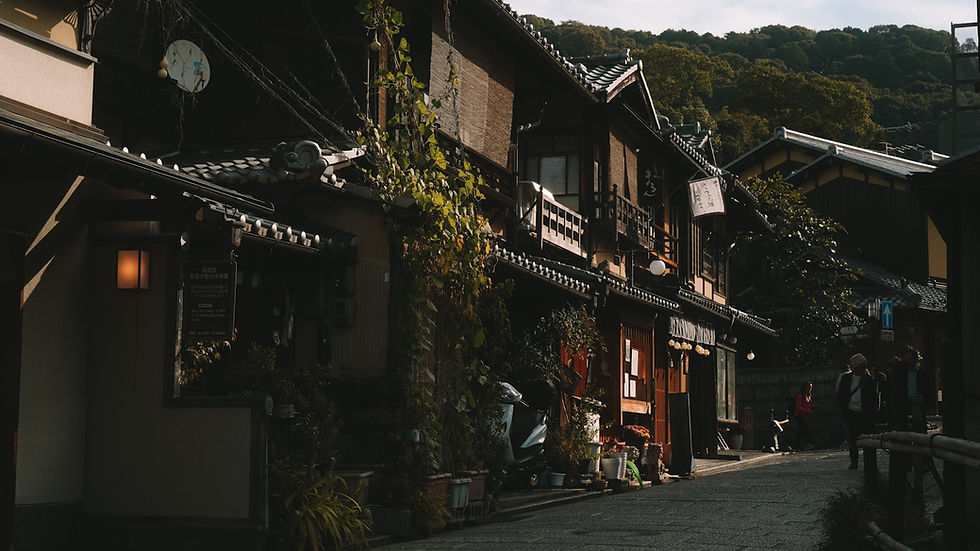
Shirakawa Canal: We enjoyed a sunset walk along the cobblestone road by the Shirakawa Canal, where willow trees and quiet buildings line the water.

Chao Chao Gyoza: For dinner, we were craving different things—Kevin had ramen while I went next door for dumplings at Chao Chao Gyoza. This foreigner-friendly restaurant offers an extensive menu dedicated entirely to gyoza, with several different types to choose from.

Day 7 (Kyoto):
Tenryu-ji: Designated as a UNESCO World Heritage site, Tenryu-ji is a Zen Buddhist temple nestled beneath a forested mountain. This temple is known for its beautifully landscaped garden and pond, which was surrounded by fall foliage when we visited. A short staircase leads to a viewpoint at the top, offering a view of the temple grounds surrounded by mountains.
Tickets are required and can only be purchased on-site.


Arashiyama Bamboo Grove: Located right by Tenryu-ji, Arashiyama Bamboo Grove is a forest of towering bamboo stalks with a pathway winding through the middle. While you're here, be sure to check out the Aspen Coffee truck at the end of the path—their melon bread with ice cream was so tasty!

Togetsukyō Bridge: Togetsukyō Bridge is a wooden bridge over the Katsura River. The walk from Arashiyama Bamboo Grove to the bridge along the river was an unexpected highlight for me. If you follow the riverside path, it’s quieter and far less crowded than the main road. There is an abundance of lush greenery (and during autumn, so many fall-colored trees) lining the water. The bridge itself is picturesque, set against a backdrop of forested mountains.


Arashiyama Monkey Park: Arashiyama Monkey Park was another highlight of our visit to Japan. After a short uphill walk, you'll reach the park where there are Japanese macaques (snow monkeys) roaming freely. They were so stinkin' adorable with their human-like gestures—tiny fingers and all. You can even purchase snacks (that are safe for the monkeys) to feed them!
Tickets are required and can only be purchased on-site.


Nijō Castle: Nijō Castle dates back to 1603 and served as the residence of Tokugawa Ieyasu, the first shogun of the Edo period. The castle is known for its imposing stone walls, beautifully landscaped gardens, and ornately decorated palace buildings. This UNESCO World Heritage site offers a glimpse into Japan’s feudal history and architecture.
Tickets are required, and can be purchased either online in advance or on-site. Click here for more details.

Honolu’s Wagyu Udon & Ramen: To end the day, we had dinner at Honolu’s Wagyu Udon & Ramen—a restaurant offering a small variety of Japanese dishes. I had the mentaiko udon, which was perfectly creamy and savory.

Day 8 (Kyoto):
Yasaka Pagoda: Yasaka Pagoda is one of Kyoto’s most photographed places, and it’s easy to see why. This five-story Buddhist pagoda stands out dramatically in the middle of a quaint neighborhood. You can find the most popular viewpoint of the pagoda here.
While you're in the area, be sure to visit Ninenzaka—a stone-paved road lined with a handful of shops.


Kiyomizu-dera: Kiyomizu-dera is a Buddhist temple dating back to 778 AD—and one of the most memorable places we visited in Kyoto. This UNESCO World Heritage Site is tucked away on a forested mountainside, and its highlight is the Main Hall which sits on a unique wooden platform stretching out over a hillside. This place was something else!
Tickets are required and can only be purchased on-site.

Sanjūsangendō Temple: Visiting Sanjūsangendō Temple was a special experience. This temple is home to 1,001 meticulously crafted, life-sized Kannon statues (you might know Kannon as Guanyin). Photography isn’t allowed inside, which makes the visit feel even more intimate. Growing up in a Buddhist household, this visit was particularly meaningful to me—but whether you practice the religion or not, I highly recommend adding this to your itinerary.
Tickets are required and can only be purchased on-site.

Men-doraku Dai: For lunch, we went to Men-doraku Dai. This restaurant specializes in udon, and is also known for its oyakodon—chicken and egg simmered in a savory-sweet broth and served over rice. This was such a comforting meal, and the owner even came out to greet us afterward!

Fushimi Inari Taisha: Fushimi Inari Taisha is one of the most photographed places in Japan. If you’ve seen photos of the country, chances are you’ve come across the iconic torii gates of Fushimi Inari Taisha. Here you can walk through thousands of torii gates winding through a forested mountainside, going as far (or as little) as you'd like.

S Vietnamese Cuisine: For dinner, we wanted a break from Japanese food and found S Vietnamese Cuisine. We went in with no expectations, and it turned out to be so good. Their bún bò huế (beef noodle soup) and papaya salad were both fantastic!

Day 9 (Tokyo):
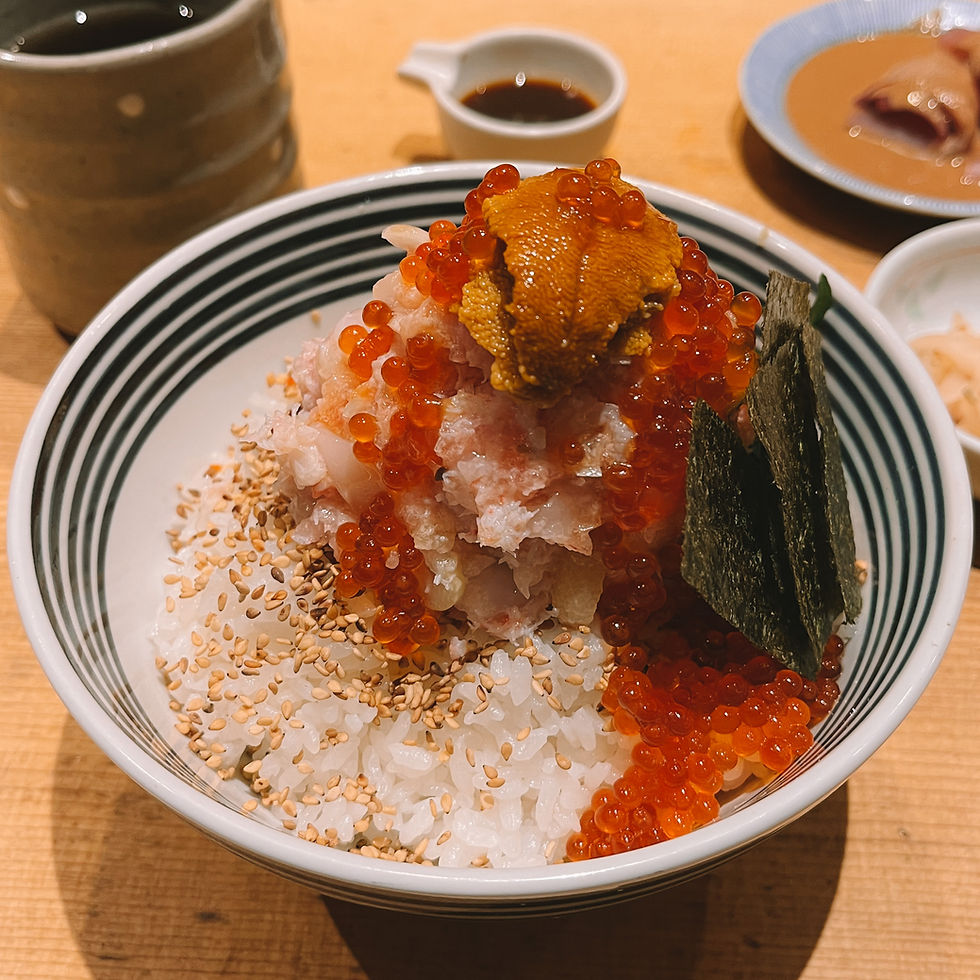
Nihonbashi Kaisen Donburi Tsujihan: After our train ride from Kyoto to Tokyo, our first stop was lunch. Recommended to us by Kevin's family, Nihonbashi Kaisen Donburi Tsujihan was well worth the wait. This is a small, intimate restaurant with seats surrounding the chefs and a menu centered around seafood rice bowls. I had the Matsu bowl, which was loaded with salmon roe, tuna, crab, sea urchin, and more—it was delicious!
Sensō-ji: Before heading to the airport for our flight home, we visited Sensō-ji—Tokyo’s oldest Buddhist temple dating back to 645 AD. Featuring a main hall and a five-story pagoda, the temple complex feels massive and is worth carving out time for during your visit. I distinctly remember the strong scent of incense here, which reminded me of home (again).
While you’re here, take some time to explore Asakusa—the neighborhood surrounding the temple where you’ll find craft shops, food stalls, and historic streets.


Comments